Natural Ways to Boost GLP-1: Feel Fuller, Lose Weight, and Ease Joint Pain
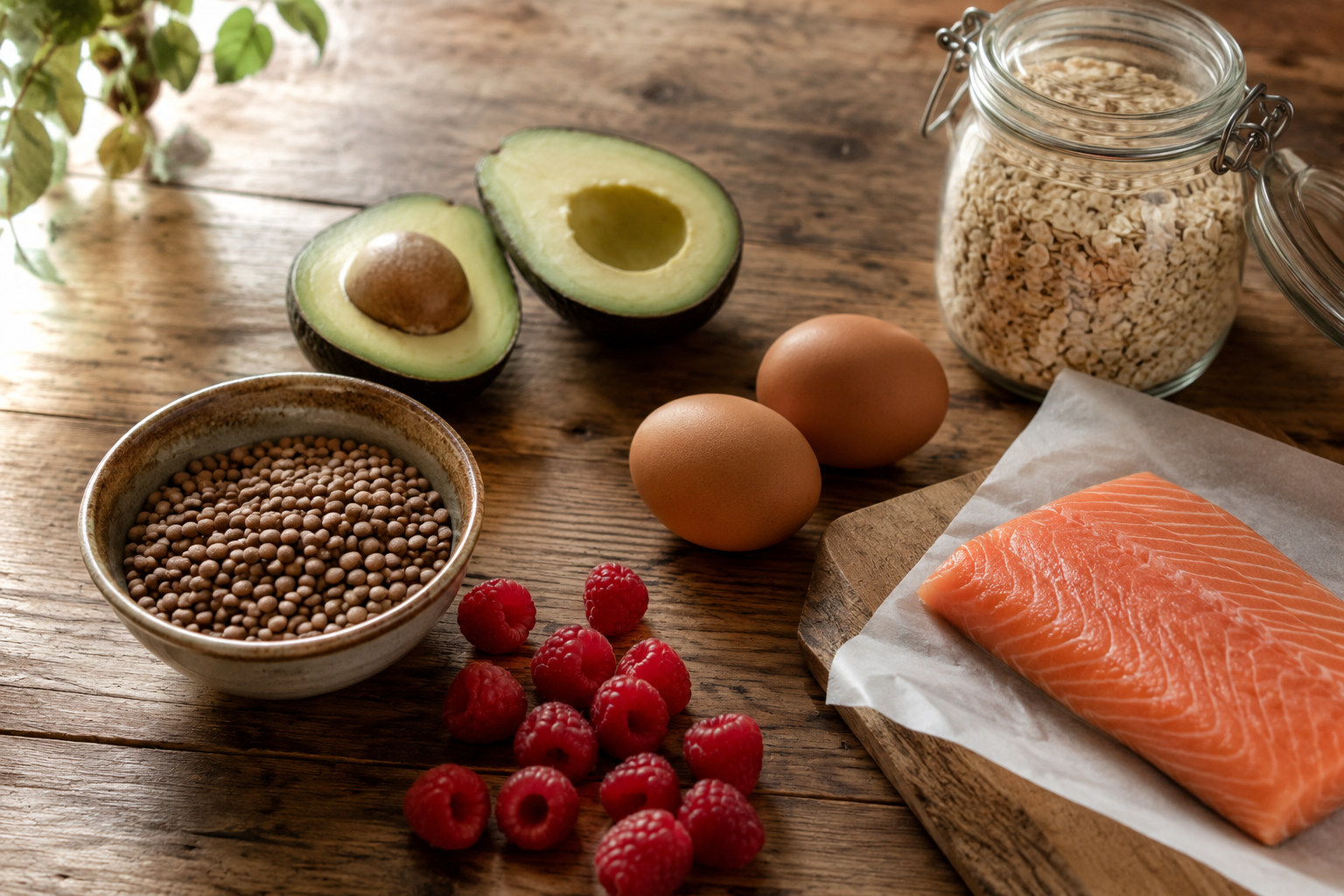
Your body makes its own GLP-1 hormone. These everyday foods help it work better, supporting natural satiety, modest weight loss, and real relief for your knees and hips. Small changes. Real satiety. And yes, your knees will notice.
There’s a lot of noise right now about GLP-1 medications. Ozempic, Wegovy, Mounjaro. Maybe you’ve heard about them. Maybe you’ve considered them. Either way, here’s something worth knowing: your body already makes GLP-1. It’s not a drug. It’s a hormone. And the foods you eat every day either help it do its job or work against it.
This isn’t about chasing a pharmaceutical effect with a smoothie. It’s about understanding what your gut is actually trying to do and giving it the right tools to do it.
What Is GLP-1 and Why Does It Matter?
GLP-1 stands for glucagon-like peptide-1. Your gut releases it every time you eat. Its job is to tell your brain you’re full, slow down digestion so you actually feel satisfied, and help regulate blood sugar by signaling your pancreas to release insulin.
In simple terms: GLP-1 is your body’s natural “stop eating” signal.
The weight-loss medications you’ve heard about from your doctor or friends work by mimicking this hormone and extending its effects. Normally, GLP-1 breaks down in your body in a matter of minutes. The drugs can keep that signal active for days. That’s powerful, and it’s also why those medications come with real side effects and real costs.
But here’s the thing. Certain foods can trigger your body to release more GLP-1 naturally. Not at the same intensity as an injection, but in a way that’s consistent, sustainable, and paired with nutrients your body genuinely needs. The effect builds over time when you eat this way regularly.
Foods That Support Natural GLP-1 Release
These are not exotic supplements. Most of them are already in your kitchen or easy to find at any grocery store.
Protein-rich foods are the strongest natural stimulators of GLP-1 release. Eggs, Greek yogurt, fish, chicken, beans, and lentils all prompt a meaningful GLP-1 response after eating. The effect is real and relatively quick, though it doesn’t last as long as the medication version. Pairing protein with fiber extends that feeling of fullness.
High-fiber and fermentable fiber foods play a longer game. When gut bacteria break down fiber, they produce short-chain fatty acids that continue to stimulate GLP-1 receptors in the lower gut. Foods like oats, black beans, lentils, raspberries, Brussels sprouts, and split peas are good sources. Whole grains like wheat, rye, and barley also contribute, as do resistant starches found in green bananas, cooked-and-cooled potatoes, and cooked-and-cooled rice.
Healthy fats also have a role. Olive oil, avocado, salmon, sardines, and mackerel activate receptors on the cells that produce GLP-1. One study found that GLP-1 levels were higher after eating bread with olive oil compared to bread with butter. Avocados are a notable standout here, offering both fiber and monounsaturated fat in one food.
Eating order matters too. Research from Ohio State’s dietitian team suggests that eating protein and fat together with fiber before carbohydrates is more effective at triggering GLP-1 than eating carbohydrates first. Vegetables before starch has a similar effect. It’s a small habit shift that costs nothing.
Satiety Is the Real Win

One of the reasons GLP-1 gets so much attention is that it reliably reduces what some people call “food noise,” that constant low-level thinking about what to eat next. When GLP-1 is working well, meals feel satisfying in a way that actually lasts. You stop eating because you’re full, not because you forced yourself to stop.
That kind of satiety is not just physical. When you feel genuinely satisfied after a meal, there’s less anxiety around food, less negotiating with yourself in the afternoon, and less likelihood of eating past the point of comfort at night.
Comfort matters here too. The foods that support GLP-1 are also, by and large, the foods that feel good to eat. A bowl of oatmeal with berries. Lentil soup. Salmon with roasted vegetables. Eggs on a weekend morning. These are not deprivation foods. They’re the kind of meals that settle you.
The Emotional Lift of Losing Even a Little
There’s something that doesn’t get talked about enough in wellness conversations: how good it feels to lose even five or ten pounds when you weren’t expecting to.
It’s not about a number on a scale meaning something about your worth. It’s more practical than that. When your body feels a little lighter, you move a little easier. Clothes fit differently. You sleep better. Your energy shifts. And something in your thinking shifts too, a quiet kind of confidence that builds when you realize your choices are actually working.
That emotional lift is real and it’s worth honoring. It’s also its own kind of motivation. Not the anxious kind that comes from punishing yourself into a smaller size, but the grounded kind that comes from feeling better and wanting to keep going.
Your Knees and Hips Are Paying Attention
Here’s something that tends to surprise people: losing a small amount of weight has a disproportionately large effect on your joints.
Research consistently shows that every pound of weight lost removes about four pounds of pressure from the knees during movement. Lose ten pounds, and your knees experience roughly 40 fewer pounds of force with every step. For people dealing with knee or hip pain, stiffness in the morning, or early signs of osteoarthritis, this is not a small thing.
Cleveland Clinic rheumatologist Dr. Elaine Husni has noted that losing as little as ten pounds can reduce the progression of knee osteoarthritis by 50 percent. That’s a significant reduction from a modest goal.
The joint benefits go beyond mechanics too. Fat tissue is not passive. It actively produces inflammatory compounds that circulate through the body and aggravate joint pain, even in joints that aren’t directly weight-bearing. Reducing even a small amount of body fat can lower that systemic inflammation and translate to less stiffness, less swelling, and more comfortable movement day to day.
This is why so many people notice their hips and knees start to feel better before they’ve lost a dramatic amount of weight. The body doesn’t wait. It responds to even small reductions.
Putting It Together
You don’t need a new diet plan. You need a few consistent habits:
- Build meals around protein and fiber first
- Add healthy fats like olive oil and avocado oil regularly
- Eat vegetables before the heavier parts of the meal when you can
- Choose whole grains and legumes over refined starches most of the time
- Slow down at meals; research suggests that taking 20 to 30 minutes to eat rather than five supports better GLP-1 release
None of this is radical. It’s the direction that most people already know they want to go. The GLP-1 angle just gives you a clearer picture of the biology that makes it work, and why foods like beans, eggs, oatmeal, and salmon keep showing up on every credible list of things worth eating.
Your body knows what to do. The goal is to give it the chance.
Sources
- Ohio State Health and Discovery: Tips for activating your GLP-1 levels naturally
- Cleveland Clinic: Here’s Why Losing Weight Is the Key to Losing Joint Pain
- Harvard Health: Why weight matters when it comes to joint pain
- The Conversation: What and how you eat can increase the effects of GLP-1 without drugs
Looking for ways to put these foods into a real meal plan? Check out our wellness and meal planning posts for ideas that work with your week, not against it.
This post contains an affiliate link for avocado oil, which means I may earn a small commission if you purchase something I recommend. It doesn’t cost you anything extra, and I only link to things I’d actually put in my own kitchen.




1 comment