Finding Your Purpose: Meaning, Direction, and What Matters to You

What gives your life meaning? What matters most to you? And how do you decide where to go when the path ahead isn’t clear?
Questions about purpose don’t always come with easy answers. Sometimes you have a strong sense of direction. Other times, life changes, unexpected challenges, or shifting priorities leave you wondering what comes next.
But not everyone is searching for a purpose, and not everyone feels something is missing from their life. Some people are still trying to figure out what matters most to them. Others have spent years looking without finding a clear answer. And some are perfectly satisfied with the life they’ve built.
All of those experiences are valid.
Finding your purpose doesn’t mean discovering one perfect calling or creating a detailed plan for the rest of your life. It’s about understanding what matters to you, recognizing what gives your life meaning, and making choices that reflect the person you are and the life you want to live.
Purpose can be found in big ambitions, but it can also be found in everyday experiences, relationships, responsibilities, interests, and the things that make life feel worthwhile. And sometimes, being content with the life you have is purpose enough.
Understanding Your Purpose
Purpose means different things to different people. For some, it may be connected to a career, a personal mission, or a long-term goal. For others, it comes from family, creativity, helping others, learning, or making a positive difference in their community.
There isn’t one correct way to define it.
Your sense of purpose may also change as you move through different stages of life. What mattered deeply to you years ago may not carry the same importance today. That doesn’t mean you have lost your direction. It may mean you’re growing, reassessing your priorities, or making room for something new.
Understanding your purpose starts with asking honest questions about what matters to you now. But it doesn’t mean you have to keep searching if you’re already happy with the answers your life has given you.
You Don’t Have to Be Searching for Something More
There’s a common assumption that everyone should be looking for something bigger, better, or more meaningful. Personal-growth messages often encourage us to discover our calling, pursue our dreams, and keep reaching for the next thing.
But what if you’re already satisfied?
Being content with your life isn’t the same as lacking purpose. You don’t have to chase a bigger dream, discover a hidden calling, or constantly look for ways to become something more. A life built around family, friendships, familiar routines, personal interests, or simple contentment can be every bit as meaningful as one built around a major ambition.
Some people are curious about their purpose and want to explore the possibilities. Some aren’t sure what they’re looking for. Some have searched for years without finding a satisfying answer. Others have never felt the need to ask the question.
You don’t have to manufacture a search just because someone says you should.
If you’re curious about your purpose, there’s room to explore that here. If your sense of purpose has changed, there’s room for that, too. And if you’re happy where you are, you don’t need to change a thing just to meet someone else’s expectations.
Discovering What Matters Most
If you are interested in exploring your purpose, a good place to begin is with the things you value.
Think about the experiences that make you feel fulfilled, the people and causes that matter to you, and the activities that give you a sense of satisfaction. Consider what you would like more of in your life, as well as what no longer feels right.
You don’t need to have every answer. Reflection is a starting point, not a test you have to pass.
Explore practical ways to begin with Discovering Your Path to Passion and Purpose and Values Clarification Emerges as Key Wellness Trend for 2025.
Exploring Your Interests, Passions, and Possibilities
Your interests can offer useful clues about what gives your life meaning. They may point toward activities you want to pursue, skills you’d like to develop, causes you care about, or experiences you’d like to make time for.
But passion doesn’t have to become a business, a career, or a lifelong commitment to be worthwhile. Sometimes an interest is simply something you enjoy. That has value, too.
If you’re unsure where to begin, try looking at your interests from different angles. What makes you curious? What do you enjoy learning about? What would you like to try if you gave yourself permission to explore?
The exercises in 11 Inspiring Purpose Discovery Exercises can help you think through those questions.
Creating a Sense of Direction
Purpose and direction are connected, but they aren’t exactly the same thing.
You can have a general sense of what matters to you without knowing precisely what your future should look like. You can also have goals without being sure they reflect what you truly want.
Creating a sense of direction means identifying what you’d like to move toward and considering how your everyday choices support that direction.
A personal vision can help you put those ideas into words. It doesn’t have to be a rigid picture of the future. Think of it as a guide that can evolve as your circumstances and priorities change.
Explore 11 Vision Building Practices for Discovering Your Purpose for ways to begin shaping that picture.
When Your Sense of Purpose Changes
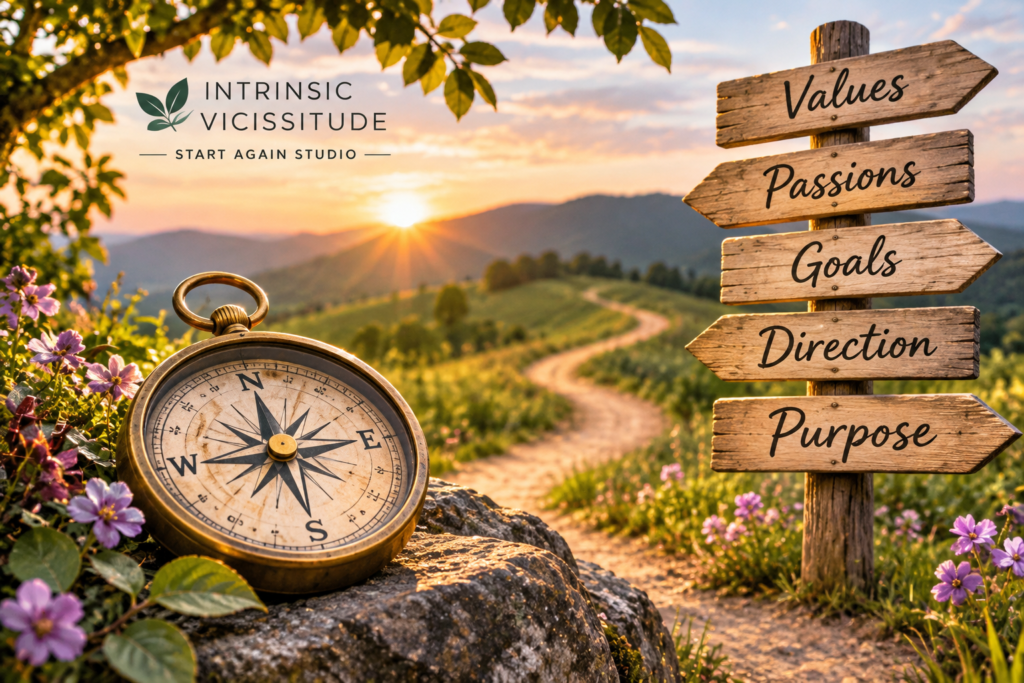
Sometimes the questions about purpose become more difficult during major life changes.
A career change, divorce, retirement, an empty nest, a move, or the loss of an important relationship can affect how you see yourself and your future. Responsibilities that once shaped your days may change, and plans you expected to follow may no longer fit.
It’s normal to need time to adjust.
You don’t have to replace an old purpose immediately or turn every difficult experience into a lesson. Give yourself room to consider what has changed, what you still value, and what you may want your next chapter to look like.
A new sense of purpose can develop gradually. Sometimes it begins with something as simple as recognizing that the life you’re living today needs a different direction.
And sometimes, after a period of change, you discover that what you really want is a return to a simpler, more familiar life. That’s a perfectly reasonable direction, too.
Building a Life That Reflects Your Values
Discovering what matters is one part of the process. Finding ways to make room for those things in everyday life is another.
That might mean changing how you spend your time, reconnecting with people, exploring an interest, volunteering, learning something new, or reconsidering a commitment that no longer fits.
You don’t need to overhaul your entire life. Small decisions can help bring your daily activities into closer alignment with your priorities.
And remember, purpose isn’t a productivity measure. You don’t have to accomplish something impressive every day to live a meaningful life. Sometimes showing up for the people you love, enjoying a quiet afternoon, caring for something, or appreciating what you already have is enough.
Your Purpose Can Grow and Change With You
You may not find one final answer to the question of purpose, and that’s okay. Your priorities, relationships, interests, and circumstances will continue to evolve.
Instead of treating purpose as a destination you have to reach, consider it an ongoing process of understanding what matters and making choices that reflect it. Or, if you’re already content with your life, allow yourself to enjoy that without feeling obligated to search for something more.
You can change direction. You can explore something new. You can decide that what once felt important no longer belongs at the center of your life.
You can also decide that the life you have is the life you want.
The goal isn’t to create a perfect life plan or meet someone else’s definition of a meaningful existence. It’s to recognize what matters to you, whether that’s something you’re still discovering or something you’ve understood for years.
Purpose is personal. It doesn’t have to look the same for everyone, and it doesn’t have to be something you’re actively pursuing.
Additional Reading: Exploring Your Purpose
If you’d like to explore these ideas further, these articles offer additional perspectives and practical exercises: