Energy Management Tools: Your Complete Guide to Sustainable Productivity
Stop managing time. Start managing energy.
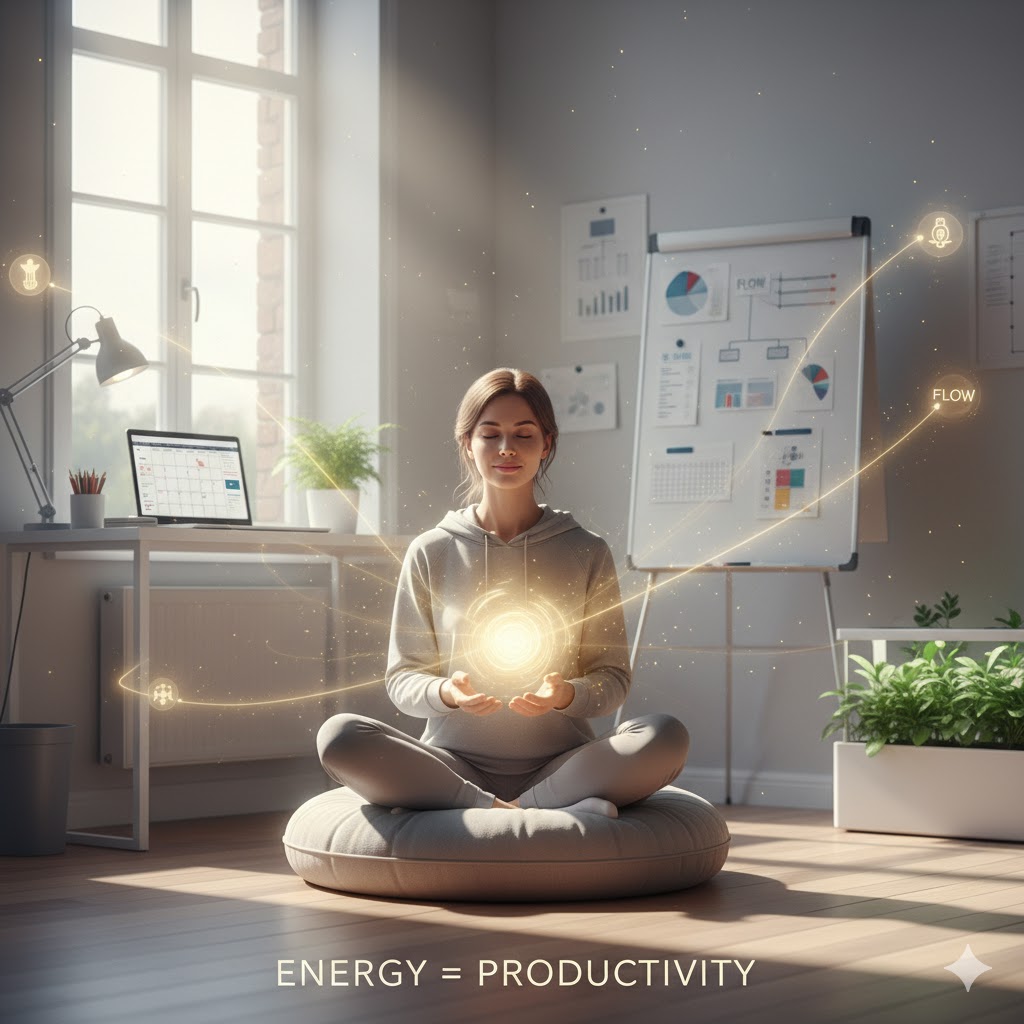
Why Energy Management Changes Everything
You’ve tried every productivity hack. You’ve color-coded your calendar, batched your tasks, and downloaded the latest time-tracking app. Yet somehow, you still hit that 2pm wall where your brain turns to fog and your motivation evaporates.
Here’s why: You’ve been optimizing the wrong resource.
Time is democratic—we all get the same 24 hours. But energy? Energy is the secret currency of productivity. It’s finite, fluctuating, and completely personal. Two people with identical schedules can have vastly different outputs simply because one understands how to work with their energy while the other fights against it.
The good news? Energy management is a learnable skill. And unlike time, which you can’t create more of, you can actually increase your energy capacity through strategic practices.
Let’s explore the three core tools that will transform how you work, create, and live.
The Three Core Energy Management Tools
Tool #1: The Energy Audit
What It Is:
A simple 3-day tracking exercise that reveals your unique energy patterns, peak performance windows, and hidden energy drains.
Why It Matters:
You can’t optimize what you don’t measure. Most people have no idea when they’re actually at their best. They schedule important work based on when their calendar is free, not when their brain is primed. The Energy Audit changes that.
How to Do It:
For three consecutive days (ideally including one weekend day to see the full pattern), track your energy level every hour you’re awake.
Record four things:
- Time (e.g., 9:00am, 10:00am)
- Energy Level (scale of 1-10, where 1 = completely drained, 10 = peak vitality)
- Activity (what you were doing during that hour)
- Mood/Notes (how you felt, any factors affecting energy)
Example Entry:
- Time: 10:00am
- Energy: 8/10
- Activity: Writing project proposal
- Notes: After coffee and light breakfast, felt focused and creative
What You’ll Discover:
After three days, patterns will emerge:
- Your natural peak performance windows
- Activities that energize vs. drain you
- How sleep, meals, and breaks affect your energy
- The difference between weekday and weekend rhythms
- Your chronotype (are you truly a morning person or night owl?)
Pro Tip: Be honest, not aspirational. If you’re a 3/10 at 7am, write it down. This is data collection, not self-judgment.
Tool #2: Task-Energy Matching
What It Is:
A strategic approach to scheduling that aligns your most demanding work with your highest energy periods, and reserves low-stakes tasks for when you’re running on fumes.
The Core Concept:
Not all tasks require the same cognitive load. Writing a strategic plan requires deep focus and creativity. Replying to routine emails does not. Yet most people tackle both with the same random scheduling approach—and wonder why the important stuff never gets done well.
The Three Energy Categories:
HIGH-ENERGY TASKS (Require peak mental performance)
- Strategic planning and decision-making
- Creative work (writing, designing, problem-solving)
- Complex analysis or learning new skills
- Difficult conversations or negotiations
- Deep work that requires sustained focus
MEDIUM-ENERGY TASKS (Require moderate attention)
- Routine meetings and collaboration
- Project management and coordination
- Moderately complex communication
- Research and information gathering
- Editing and reviewing work
LOW-ENERGY TASKS (Can be done on autopilot)
- Responding to straightforward emails
- Filing and organizing
- Data entry and administrative work
- Simple scheduling and logistics
- Routine maintenance tasks
How to Implement Task-Energy Matching:
Step 1: Audit your current task list
Write down everything on your plate this week. Be specific.
Step 2: Categorize each task
Label each one as HIGH, MEDIUM, or LOW energy requirement.
Step 3: Map to your energy windows
Using your Energy Audit results, identify:
- Your 2-3 hour peak performance window (protect this fiercely)
- Your secondary productive windows
- Your predictable low-energy periods
Step 4: Rebuild your schedule
- Schedule HIGH-energy tasks ONLY during peak windows
- Place MEDIUM-energy tasks in secondary windows
- Save LOW-energy tasks for afternoon slumps or end-of-day
- Build in transition time between different energy-level tasks
Example Daily Structure for a Morning Person:
6:00am – 7:00am: Morning routine, exercise (energizing)
7:00am – 9:00am: High-energy creative work (PEAK WINDOW)
9:00am – 10:00am: Medium-energy collaborative tasks
10:00am – 12:00pm: High-energy strategic work (SECONDARY PEAK)
12:00pm – 1:00pm: Lunch break + short walk
1:00pm – 2:00pm: Medium-energy routine work
2:00pm – 3:00pm: LOW-ENERGY PERIOD: Admin tasks, email
3:00pm – 4:00pm: Recovery break + low-stakes activities
4:00pm – 5:30pm: Medium-energy wrapping up projects
5:30pm+: Personal time, wind-down routine
Example Daily Structure for an Evening Person:
9:00am – 10:00am: Slow morning routine, low-energy admin
10:00am – 12:00pm: Medium-energy collaborative work
12:00pm – 1:00pm: Lunch + energizing activity
1:00pm – 3:00pm: Medium-energy project work
3:00pm – 4:00pm: Strategic break (this is your recharge before peak)
4:00pm – 7:00pm: High-energy creative work (PEAK WINDOW)
7:00pm – 8:00pm: Dinner break
8:00pm – 10:00pm: High-energy deep work (SECONDARY PEAK)
10:00pm+: Wind-down, low-energy tasks
The Game-Changing Shift:
Notice what’s different? You’re not doing more work—you’re doing the RIGHT work at the RIGHT time. This single shift can double your effective output without adding a single hour to your day.
Tool #3: Strategic Recovery Breaks
What It Is:
Intentionally designed breaks that actually restore your energy instead of just filling time between tasks.
The Problem with Traditional Breaks:
Most people take breaks wrong. They:
- Wait until they’re completely drained to rest (too late)
- Fill breaks with more screen time (not restorative)
- Feel guilty about stepping away (creates stress)
- Take breaks at random intervals (no rhythm)
Real recovery is strategic, intentional, and guilt-free.
The Science-Backed Approach: The 52-17 Method
Research from the Draugiem Group found that the most productive people work for 52 minutes, then take a 17-minute break. This isn’t arbitrary—it aligns with your brain’s natural focus cycles (called ultradian rhythms).
How to Implement:
- Set a timer for 52 minutes of focused work
- When it goes off, take a full 17-minute break
- During the break: completely disengage from work
- Repeat the cycle
Can’t swing 17 minutes? Try modified versions:
- 50 minutes work / 10 minutes break
- 25 minutes work / 5 minutes break (Pomodoro Technique)
The key: Schedule breaks BEFORE you’re exhausted.
The Micro-Recovery Toolkit
Not all breaks need to be 17 minutes. Here are targeted recovery techniques for different time windows:
2-MINUTE ENERGY RESET
- Box Breathing: Inhale for 4 counts, hold for 4, exhale for 4, hold for 4. Repeat 4 times.
- Desk Stretches: Shoulder rolls, neck stretches, wrist circles
- Gratitude Pause: Name three things going well right now
- Water + Sunlight: Drink water while standing in natural light
5-MINUTE RECHARGE
- Movement Break: Walk stairs, do jumping jacks, dance to one song
- Fresh Air: Step outside, take deep breaths, look at distant objects
- Quick Meditation: Use a guided app or simply close your eyes
- Social Connection: Have a genuine 5-minute conversation (not work-related)
10-MINUTE RESTORATION
- Nature Connection: Walk outside, sit under a tree, listen to birds
- Power Nap: 10-20 minute nap (no longer or you’ll feel groggy)
- Creative Play: Doodle, play an instrument, solve a puzzle
- Complete Environment Change: Leave your workspace entirely
15-20 MINUTE RENEWAL
- Exercise: Short workout, yoga sequence, neighborhood jog
- Mindful Eating: Lunch away from your desk, chew slowly, savor
- Learning for Joy: Read something unrelated to work, watch an inspiring talk
- Connection Time: Call a friend, play with your pet, tend to plants
What Makes a Break Actually Restorative:
✅ Physical movement (even gentle)
✅ Change of environment (different room, outside)
✅ Nature exposure (plants, sunlight, fresh air)
✅ Social connection (genuine human interaction)
✅ Creative engagement (non-work related)
✅ Mindful presence (not multitasking)
❌ Scrolling social media
❌ Checking work email
❌ Staying at your desk
❌ Stressful news consumption
❌ Task-switching to different work
The Afternoon Slump Protocol:
Most people experience a predictable energy dip between 2-4pm. Instead of fighting it with caffeine and willpower, work with it:
- Expect it. Build it into your schedule.
- Plan low-energy tasks for this window.
- Take a 10-20 minute strategic break at 2pm (before the slump fully hits).
- Include movement (walking meeting, stretch break).
- Avoid heavy carbs at lunch (they deepen the slump).
- Get natural light exposure if possible.
Your Body’s Natural Rhythm:
Your energy doesn’t flow in a straight line. It pulses in 90-120 minute cycles called ultradian rhythms. You might feel focused for 90 minutes, then suddenly foggy. That’s your body asking for recovery, not a sign of laziness.
Honor these rhythms. When you feel your focus waning, that’s the optimal time to break—not push through.
Advanced Energy Management Strategies
Once you’ve mastered the three core tools, these advanced techniques will take your energy management to the next level.
Physical Energy Optimization
Hydration Tracking
Dehydration is a silent energy killer. Even mild dehydration (2% loss) reduces cognitive performance by up to 20%.
Tools:
- Set hourly water reminders on your phone
- Use a marked water bottle (time-based goals)
- Track in a habit app
- Notice: when you’re “tired,” try drinking water first
Goal: Half your body weight in ounces per day (150 lbs = 75 oz water)
Movement Integration
Sitting for extended periods drains energy, even if you’re not doing anything.
Tools:
- Standing desk (alternate sitting/standing every 30-60 minutes)
- Walking meetings for phone calls
- “Movement snacks”: 2-minute movement bursts every hour
- Stretch reminder apps
Research shows: Even 5 minutes of walking can provide 2+ hours of increased energy and focus.
Light Exposure Optimization
Light directly affects your circadian rhythm and energy levels.
Morning: Get 10-30 minutes of bright light (ideally sunlight) within 1 hour of waking. This sets your internal clock and boosts afternoon energy.
Daytime: Work near windows or use bright lighting (at least 1000 lux).
Evening: Dim lights 2-3 hours before bed. Use blue light filters on devices.
Tools:
- Light therapy lamps (10,000 lux)
- Blue light blocking glasses
- Smart home lighting systems
- Phone apps that adjust screen warmth
Mental Energy Protection
Decision Fatigue Reducers
Every decision you make depletes mental energy. Reduce trivial decisions to preserve energy for important ones.
Strategies:
- Morning routine automation: Same breakfast, same workout time, same first task
- Wardrobe simplification: Capsule wardrobe or weekly outfits planned ahead
- Meal planning: Decide once for the week, not daily
- Default rules: Create “if-then” rules for recurring decisions
- Batch similar decisions: Do all approvals at once, all scheduling at once
Context Switching Minimizers
Every time you switch tasks, you lose up to 23 minutes of productivity (University of California study) as your brain reorients.
Strategies:
- Time blocking: Dedicate specific hours to specific work types
- Single-tasking: One project, one focus, finish before switching
- App blockers: Freedom, Cold Turkey, Focus
- Communication boundaries: Check email 2-3x daily, not continuously
- Theme days: Marketing Monday, Creative Tuesday, Admin Friday
Deep Work Protectors
Create fortress-like conditions for your highest-energy work.
Strategies:
- Physical barriers: Closed door, “do not disturb” sign, headphones
- Digital barriers: Airplane mode, website blockers, notification off
- Calendar barriers: Block time as “busy,” decline meetings during peak windows
- Social barriers: Train others when you’re available vs. in deep work
- Environmental optimization: Remove clutter, optimize temperature, use focus music
Emotional Energy Management
Boundary-Setting Frameworks
People and obligations can drain your energy faster than any work task.
The Energy Boundary Audit:
- List everyone you interact with regularly
- Mark each: Energizing / Neutral / Draining
- For draining relationships: Can you limit, restructure, or release them?
- For energizing relationships: Can you spend more intentional time with them?
Saying No Without Guilt:
- “I don’t have the bandwidth for that right now.”
- “That sounds interesting, but it doesn’t align with my current priorities.”
- “I need to check my energy levels and get back to you.”
- “I can do X, but not Y.”
Energy Vampire Identification
Some activities consistently drain more than they give.
Common Energy Vampires:
- Toxic relationships that require constant management
- Obligation-based commitments (should, not want)
- Perfectionism on low-stakes tasks
- Comparing yourself to others on social media
- News/media overconsumption
- Clutter and disorganization in your space
- Unresolved conflicts or pending decisions
Action: Identify your top 3 energy vampires. Choose one to eliminate or restructure this month.
Your Recharge Activity Menu
Not all “rest” is created equal. What recharges one person depletes another.
Create your personal recharge menu by testing activities in these categories:
Solitary Recharge:
- Reading fiction
- Journaling
- Solo walks in nature
- Creative hobbies (art, music, crafts)
- Meditation or yoga
- Gardening
Social Recharge:
- Quality time with loved ones
- Group fitness classes
- Game nights
- Collaborative creative projects
- Meaningful conversations
- Volunteer work
Active Recharge:
- Exercise or sports
- Dancing
- Hiking or outdoor adventure
- Building or making things
- Cooking or baking
- Physical labor (oddly satisfying)
Passive Recharge:
- Napping
- Watching favorite shows
- Listening to music or podcasts
- Taking long baths
- Getting a massage
- Simply doing nothing
Your assignment: Test 2-3 activities from each category. Notice which ones actually leave you feeling recharged (not just distracted). Build those into your weekly rhythm.
Your Personalized Energy Management System
Now let’s bring all three tools together into a sustainable system.
Week 1: Data Collection
- Complete the 3-day Energy Audit
- Don’t change anything yet—just observe
- Note patterns, surprises, and energy drains
Week 2: Strategic Restructuring
- Categorize all your recurring tasks (HIGH/MEDIUM/LOW energy)
- Redesign your weekly schedule using Task-Energy Matching
- Protect your peak windows like they’re sacred
- Communicate new boundaries to colleagues/family
Week 3: Recovery Integration
- Add Strategic Recovery Breaks to your calendar
- Test the 52-17 method (or modified version)
- Build your personal Recharge Activity Menu
- Implement one physical energy practice (hydration, movement, or light)
Week 4: Refinement
- Review what worked and what didn’t
- Adjust timing based on real-world constraints
- Double down on practices that increased energy
- Let go of strategies that didn’t fit your life
Monthly Energy Review
Set a recurring calendar event for a monthly check-in. Ask yourself:
- Energy Audit Update: Has my energy pattern shifted? (Seasons, life changes, new routines can alter your rhythm)
- Task-Energy Alignment: Am I still protecting my peak windows, or have they been slowly eroded?
- Recovery Quality: Are my breaks actually restoring me, or have I fallen back into old patterns?
- Energy Vampires: Have new drains crept in? What needs to be eliminated or restructured?
- Wins: What energy management practice made the biggest difference this month?
Common Pitfalls (And How to Avoid Them)
Pitfall #1: Ignoring Your Chronotype
The Problem: You’re forcing yourself into a “morning person” schedule because that’s what productivity gurus preach, but you’re naturally a night owl.
The Solution: Work with your biology, not against it. If you do your best thinking at 10pm, restructure what you can to honor that. Not everyone thrives on “5am miracle mornings.”
Note: If your job demands early hours, focus on maximizing whatever peak windows you DO have control over.
Pitfall #2: Confusing Busyness with Productivity
The Problem: You’re scheduling every minute, leaving no buffer time, and wondering why you’re exhausted despite “managing your time well.”
The Solution: Energy management isn’t about cramming more in. It’s about doing LESS, but better. Build in white space. Embrace strategic rest. Busy ≠ productive.
Pitfall #3: Neglecting Recovery
The Problem: You’re great at the Energy Audit and Task Matching, but you skimp on breaks because “there’s too much to do.”
The Solution: Recovery isn’t optional—it’s where energy is rebuilt. Skipping breaks doesn’t save time; it guarantees you’ll need more time to complete tasks because you’re running on empty.
Analogy: You wouldn’t drive a car from LA to New York without refueling. Why do it with your body and brain?
Pitfall #4: All-or-Nothing Thinking
The Problem: You had a perfect week, then one chaotic day derailed everything, so you abandoned the whole system.
The Solution: Energy management is a practice, not a perfect performance. Some days will be messy. Some weeks will be survival mode. That’s life. Return to the tools when you can, without self-judgment.
Pitfall #5: Ignoring the “Why”
The Problem: You’re optimizing your energy to be more productive… but you’ve never asked “productive toward what goal?”
The Solution: Energy management should serve your values and goals, not just efficiency for efficiency’s sake. Regularly reconnect with WHY you’re doing this work in the first place.
Frequently Asked Questions
Q: What if my job doesn’t allow for flexible scheduling?
A: Focus on what you CAN control: your morning routine, lunch break activities, how you sequence tasks within fixed time blocks, evening wind-down, and weekend energy practices. Even small optimizations compound.
Q: I work shifts/irregular hours. Can this still work?
A: Absolutely. Your Energy Audit becomes even more valuable because you’ll discover your patterns relative to SLEEP, not clock time. Track energy relative to “hours after waking” instead of time of day.
Q: How long before I see results?
A: Most people notice increased focus and reduced afternoon crashes within the first week of Task-Energy Matching. Full transformation typically takes 4-6 weeks as your system becomes habitual.
Q: What if I have chronic illness or mental health conditions that affect energy?
A: These tools are especially valuable for you. Track energy alongside symptoms to identify patterns and triggers. Work with your healthcare provider to integrate energy management with your treatment plan. Be compassionate with yourself—some days, basic functioning IS peak performance.
Q: Can I really take breaks when I’m already behind on work?
A: Yes. Counterintuitively, strategic breaks make you FASTER. Working while drained means tasks take 2-3x longer. A 10-minute break can save you an hour of sluggish work.
Your Energy Management Action Plan
Here’s your simple next-step guide:
TODAY:
✅ Download the Energy Audit Tracker (link below)
✅ Set an hourly reminder to log your energy for the next 3 days
✅ Block out 1 hour this week to analyze your results
THIS WEEK:
✅ Complete your 3-day Energy Audit
✅ Identify your peak performance window
✅ Schedule ONE important task during that window
✅ Take one 10-minute strategic recovery break
THIS MONTH:
✅ Categorize all tasks by energy requirement
✅ Restructure your weekly schedule around energy, not just time
✅ Test the 52-17 method or your preferred work rhythm
✅ Build your personal Recharge Activity Menu
THIS QUARTER:
✅ Conduct monthly Energy Reviews
✅ Optimize one new area (physical, mental, or emotional energy)
✅ Share what you’ve learned with someone else (teaching reinforces learning)
✅ Celebrate your increased capacity and reduced burnout
The Bottom Line
Energy is your most valuable resource. Not time. Not money. Not even talent.
With low energy, you can’t think clearly, create brilliantly, connect authentically, or show up as your best self. With high energy, everything becomes possible.
You’ve spent years managing your time. Now it’s time to manage your energy.
Start with the Energy Audit. Honor your natural rhythms. Protect your peak performance windows. Take guilt-free recovery breaks.
Your body already knows how to work optimally. These tools simply help you listen to it.
Now stop reading and go do the thing your energy is ready for right now.
Download Your Free Energy Management Toolkit
Ready to put these tools into action? I’ve created a complete toolkit with everything you need:
📊 Energy Audit Tracker PDF – 3-day tracking spreadsheet with analysis guide
📋 Task-Energy Matrix PDF – Categorize and schedule your work strategically
⏰ Break Reminder Checklist PDF – Printable reminders for strategic recovery
📈 Monthly Energy Review Worksheet PDF – Track your progress and optimize your system
Continue Your Motivation Journey
Related Articles:
- Small Wins Strategies: Build Unstoppable Momentum
- Habit Stacking Techniques: Make Motivation Automatic
- Mindset Development: Transform Your Relationship with Challenge
Watch the Video:
Prefer to watch instead of read? Check out the companion video where I walk through these three tools in action.
What’s your biggest energy management challenge? Share in the comments below, and let’s problem-solve together.
Article by Laure | Published 10/30/2025 |
Part of the Motivation series at Intrinsic Vicissitude