Self-Care
Updated 11/26/2026
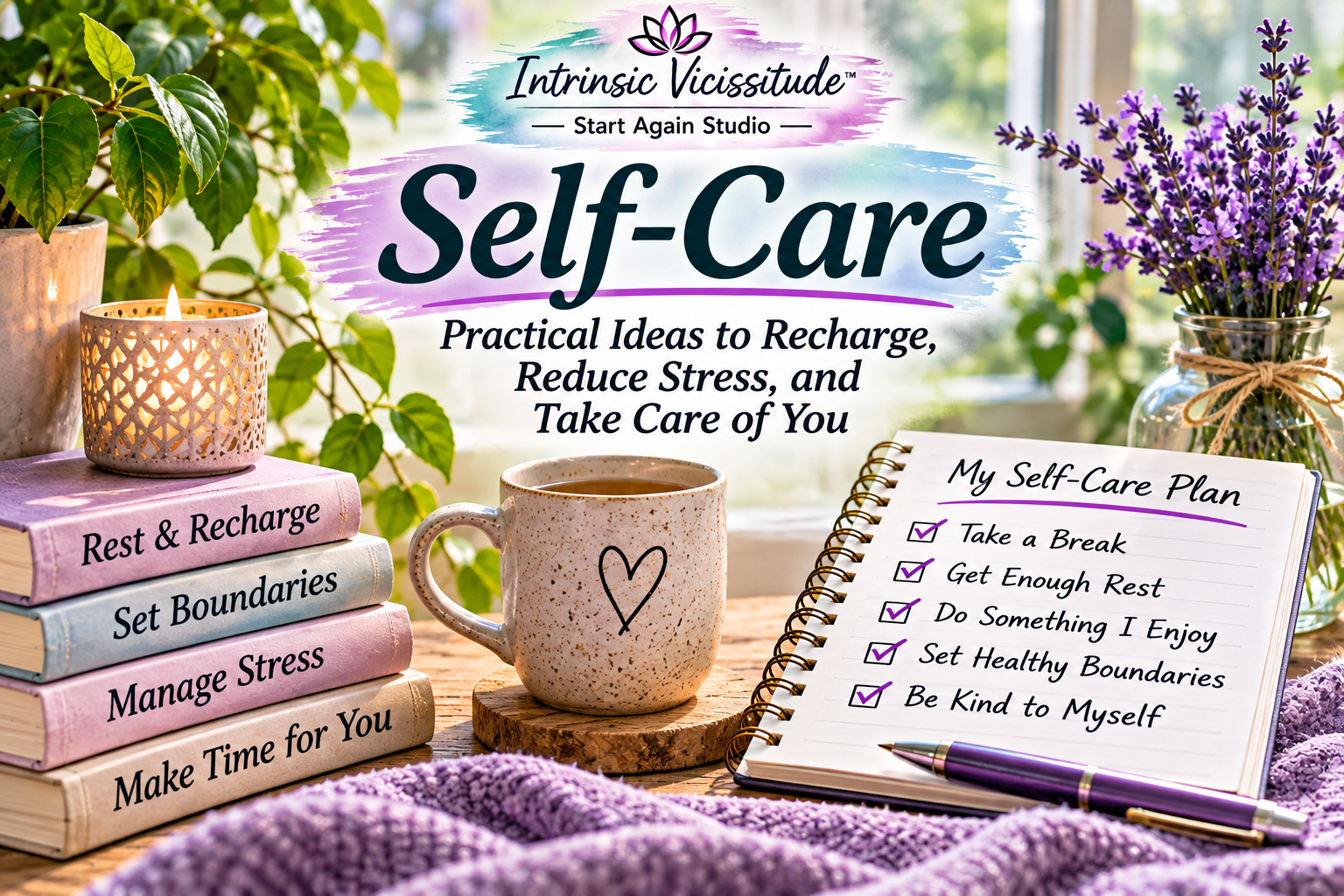
Self-care means taking practical steps to look after your physical, mental, and emotional needs. It can include getting enough rest, managing stress, setting boundaries, making time for activities you enjoy, and recognizing when you need a break.
It doesn’t have to be complicated or expensive. Small changes to your daily routine can make it easier to manage responsibilities while making time for yourself.
At Intrinsic Vicissitude, you’ll find ideas and resources to help you develop realistic self-care habits that fit your life.
What Does Self-Care Look Like?
Self-care is different for everyone. Your needs may also change depending on your responsibilities, health, work, and circumstances.
Some examples include:
- Taking short breaks during a busy day.
- Getting enough sleep and allowing time to rest.
- Making time for hobbies and activities you enjoy.
- Setting boundaries when your schedule or responsibilities become overwhelming.
- Finding practical ways to manage stress.
- Creating a comfortable place where you can relax or collect your thoughts.
- Staying connected with people who offer encouragement and support.
Self-care isn’t about adding another long list of tasks to your day. It’s about recognizing what you need and making reasonable adjustments when you can.
Making Self-Care Part of Your Routine
It can be difficult to make time for yourself when work, family, household responsibilities, and other obligations compete for your attention. Starting with a few manageable changes can make self-care easier to maintain.
You might begin by setting aside a few minutes in the morning, taking a break during the day, or creating a simple evening routine that helps you unwind.
Our article Refresh Daily: Your Self-Care Sanctuary explores practical ideas for adding small self-care activities to your morning, midday, and evening routines.
Create a Space to Relax and Recharge
You don’t need an entire room or an expensive makeover to create a place where you can take a break. A comfortable chair, a quiet corner, or a small area with a few things you enjoy may be enough.
Consider what helps you relax. You might prefer reading, listening to music, journaling, enjoying a cup of tea, or simply having a little quiet time.
The Reset Room: Your Space for Self-Care offers ideas for creating a comfortable space at home, including suggestions for lighting, colors, sounds, and simple ways to make a small area more relaxing.
Give Yourself Permission to Set Boundaries
Self-care also means recognizing your limits. You can’t always accommodate every request, meet every expectation, or take responsibility for everything around you.
Setting boundaries can help protect your time and energy. That might mean saying no to an additional commitment, asking someone to share a responsibility, or deciding when it’s time to step away from work.
Boundaries aren’t about disregarding other people. They’re about recognizing that your needs matter, too.
Find What Works for You
There isn’t one self-care routine that works for everyone. Some people benefit from structured schedules, while others prefer a more flexible approach. What helps you relax may be different from what works for someone else.
Start with something manageable. Pay attention to how you feel, keep the practices that help, and adjust the ones that don’t fit your circumstances.
Self-care shouldn’t become another source of pressure. The goal is to make everyday life a little more manageable while taking better care of yourself.
Connect With Intrinsic Vicissitude
Explore more practical ideas for wellness, personal development, and managing life’s changes through the other resources at Intrinsic Vicissitude.
You can also join our Empowered by Intrinsic Vicissitude Facebook community to connect with others and share ideas and experiences.