Master Daily Stress with Simple Steps to Find Calm and Build Resilience
By: Lexie Dy
Busy parents juggling work, household demands, and everyone else’s needs often feel stressed all day without being able to name why. The core tension is simple: daily stressors pile up quietly, and the mind starts blaming “everything” instead of spotting the real causes of stress, including subtle everyday anxiety sources like uncertainty, conflict, and mental overload. When stress recognition is missing, mood and energy can swing for reasons that feel mysterious and unfixable. Clearer awareness gives general readers a steadier starting point for building calm.
Understanding Stress and Your Stress Response
Stress is your brain and body reacting to a demand, a change, or a perceived threat. The stress response is the built-in alarm system that speeds up your heart, tightens your muscles, and narrows your focus so you can cope quickly.
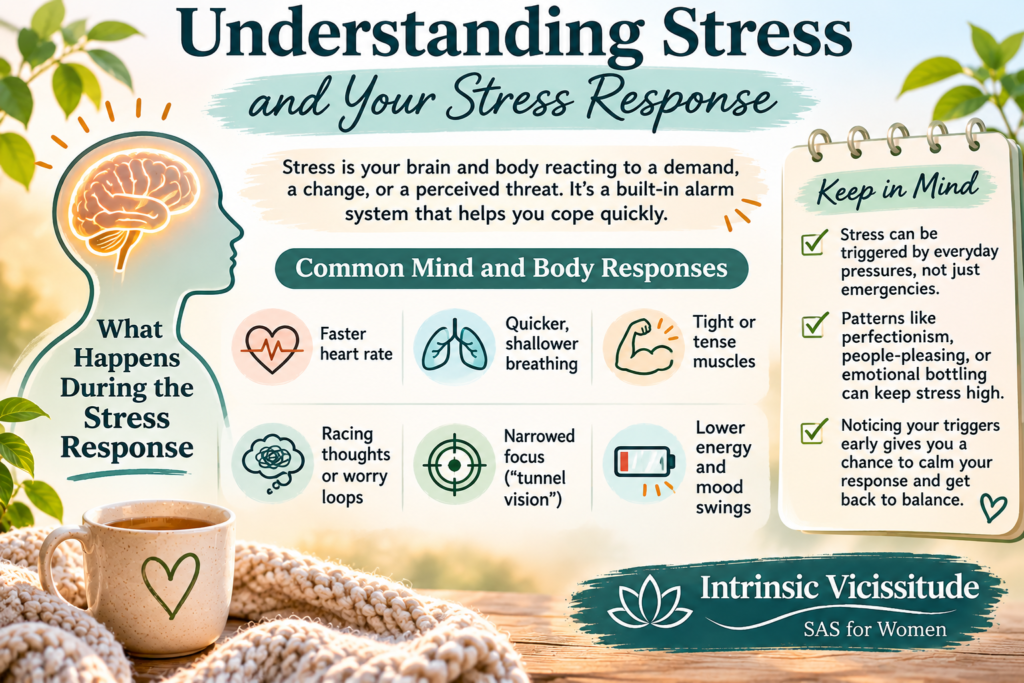
The catch is that your alarm can go off for psychological reasons, not just emergencies. Noticing patterns like worry loops, perfectionism, people-pleasing, or emotional bottling matters because reducing emotional suppression can help calm physiological stress responses instead of revving them up.
Think of stress like a smoke alarm. If you only hear “noise,” you’ll wave a towel and stay on edge. If you pause and name the trigger, whether it’s an overdue bill, a tense conversation, or a cluttered schedule, you can address the source. That sets up the real-life stress examples many people juggling multiple responsibilities face each day.
Learn from Real-Life Juggling: Work, School, and Home Pressures
Once you understand what stress feels like in your body and mind, it helps to recognize how often it’s shaped by the roles you’re trying to hold at once. Hearing real-world experiences from people balancing work shifts, classes, and home responsibilities can make everyday stress feel less like a personal failure and more like a common human experience.
These firsthand stories often echo the same pressures many adults face: too little time, academic demands alongside job expectations, and the constant pull of personal obligations. Listening to a podcast featuring Phoenix alumni can offer that kind of perspective, with examples of people naming what’s hard, reflecting on what triggers their stress, and continuing to move forward anyway. The value isn’t in copying someone else’s path; it’s in seeing how self-reflection, perseverance, and healthy coping strategies show up in real life, even when circumstances are messy.
Track Stress Triggers and Practice Daily Calm Skills
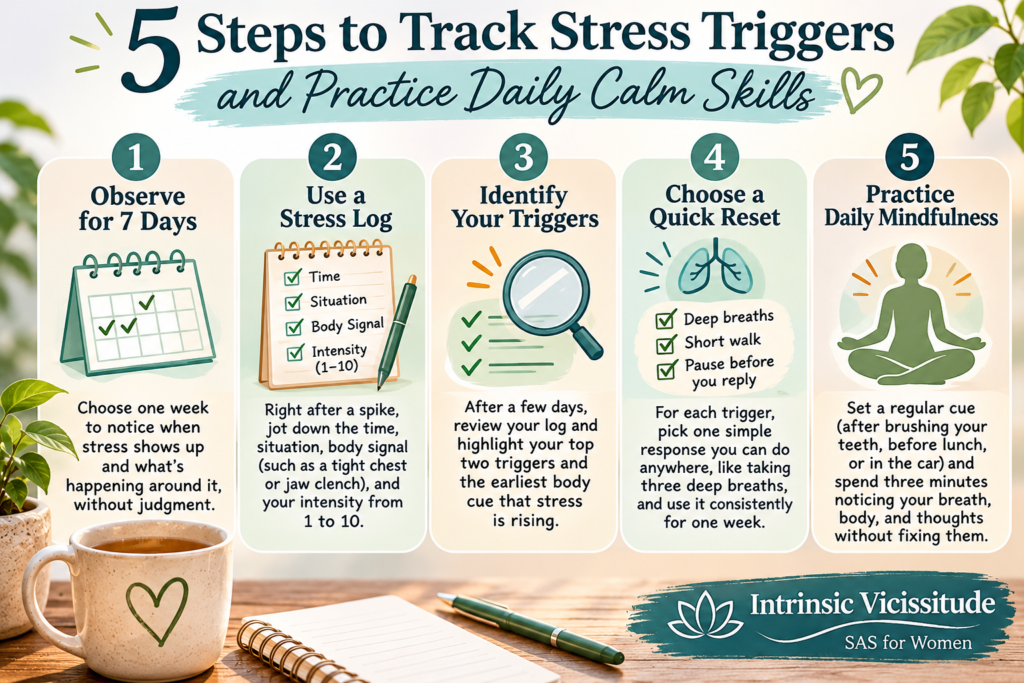
Stress can feel unpredictable until you start noticing patterns. This simple track-and-practice routine helps you spot what sets you off and gives you a few quick tools to calm your body, even on busy days.
- Step 1: Pick one week to observe, not fixChoose the next seven days as a low-pressure “data week.” Your only goal is to notice when stress shows up and what is happening around it, without judging yourself for it.
- Step 2: Use a 60-second stress log right after a spikeIn your notes app or on paper, jot down four items: time, situation (what was happening), body signal (tight chest, fast heart, jaw clench), and intensity from 1 to 10. Keeping it short makes you more likely to stick with it and gives you usable patterns quickly.
- Step 3: Circle your top two triggers and your first body cueAfter a few days, review your log and highlight the most common situations and the earliest physical signal that stress is rising. Naming the “first cue” matters because it becomes your prompt to use a coping skill before you are overwhelmed.
- Step 4: Pair each trigger with one fast resetFor each of your top triggers, choose one response you can do anywhere, such as taking three deep breaths before replying to a message or walking into a room. Keep the technique the same for a week so your brain starts linking triggers to calm actions automatically.
- Step 5: Practice a 3-minute mindfulness check-in dailySet a consistent cue (after brushing your teeth, before lunch, or when you sit in the car) and spend three minutes noticing your breath, body sensations, and thoughts without trying to fix them. Research summarized in breathwork studies suggests this kind of breathing-based practice can be linked to lower self-reported stress, making it a solid starting point.
Everyday Stress Relief Questions, Answered
Q: What if I don’t have time to do stress relief “properly”?
A: You do not need a perfect routine. Pick a 30- to 60-second reset you can do where you already are, like slow breathing while the kettle boils or before you open your inbox. Consistency matters more than duration, so aim for “tiny and daily,” not “long and rare.”
Q: How do I know if stress tools will work for me?
A: Treat it like an experiment, not a personality test. Try one technique for five days and track one signal, like jaw tension or sleep quality. Research suggests that stress is common, so needing tools is normal, not a personal failure.
Q: Why do I keep forgetting to use the technique when I need it most?
A: Forgetting is part of learning under pressure. Attach your reset to a regular cue, like sitting in the car or washing your hands, so the environment reminds you. You can also set a single daily phone reminder labeled with your first body cue.
Q: When should I switch techniques if one feels awkward or ineffective?
A: Give it a short, fair trial, like one week, so your nervous system can recognize the pattern. If it still feels wrong, change only one variable, such as doing it seated instead of standing. Keep the new option equally simple so it stays usable on busy days.
Q: Can I mix methods, or will that confuse things?
A: You can combine approaches, as long as you keep them easy to repeat. A clear definition of integrative stress management includes blending mindfulness, movement, nutrition, and other supports. Choose one “core” reset and one “bonus” support so you do not overload yourself.
Turn Daily Stress Into Long-Term Calm Through Small Habits
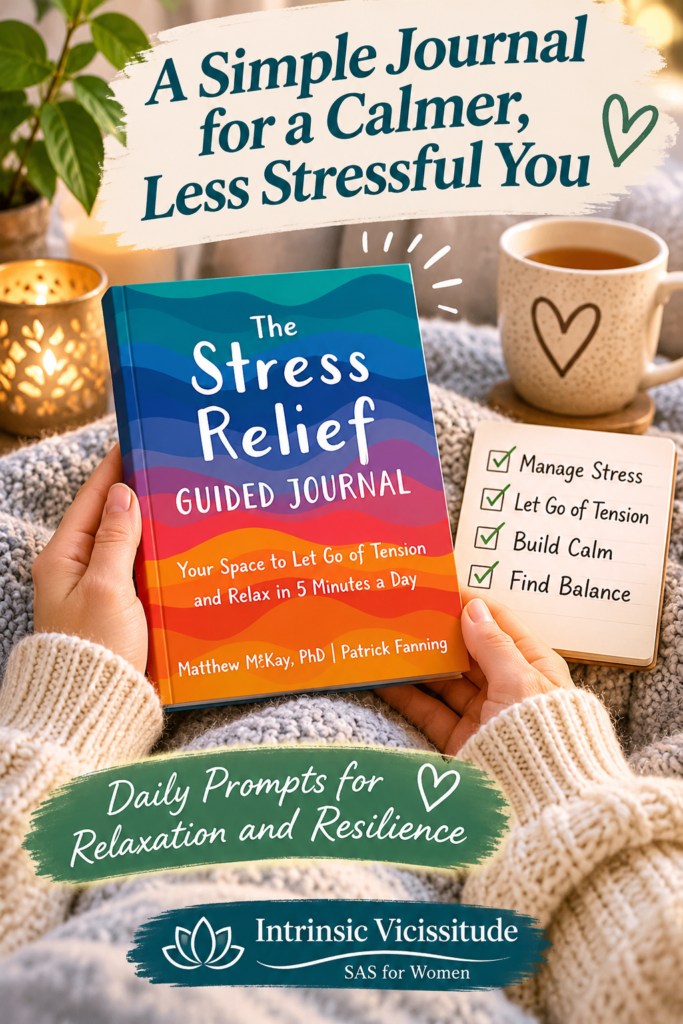
Click the image to view it on Amazon!
As an Amazon Associate, I earn from qualifying purchases. This post contains affiliate links.
Everyday stress keeps showing up, and the hardest part is staying consistent when time is tight and motivation dips. The path forward is a simple mindset: focus on repeatable basics and build long-term stress habits through small, reliable actions rather than occasional big efforts. With that approach, actionable stress reduction becomes more automatic, stress management requires less willpower, and stress resilience strategies start to feel like part of normal life.
Calm grows from what you repeat, not what you attempt once.
Special thanks to my guest writer, Lexie Dy! Lexie is a freelance writer who covers personal growth, wellness, and everyday strategies for living a more intentional life. I appreciated Lexie’s practical approach to managing everyday stress, recognizing personal triggers, and finding calm through simple, manageable habits. Her suggestions offer readers an approachable starting point for building resilience, one small step at a time. The views expressed in this post are her own.



Post Comment